American game fowl is a famous American show chicken. This bird was beard as cock fighting or pit cock. The people have stopped use the bird for fighting since most states in US forbids cock fighting in 1800s.
The bird has small oval head like egg. The cock tail is so long and wide, relative to its body. This bird character looks like a fighter. Today, People care this bird for exhibition or show only.
This chicken is descendant of various game fowls, such as, Oriental game fowl, Irish game fowl, Spanish, Old, English and Sumatra. They have color variations such as white, dark brown, wheaten, red partridge, silver duckwing, golden duckwing and many more. The comb is red pea, small double witted and red earlobes.
The bird character is aggressive as their ancestors but it can be tame in hand owner. You should not care the game rooster with other rooster. The game rooster will bully the other rooster.
The chicken is well-adapt with cold climate or heat climate. They have high intelligent. They can survive in new environment. In Hawaii, Guam, and Keywest this chicken is becoming wild chicken that lives in street or woods. The egg production is medium (we do not the exactly). It lays white egg. The hens will go broody.
Monday, August 30, 2010

Friday, August 27, 2010
Plymouth Rock Chicken Profile
 | |
| Plymouth Rock Hen |
The ancestor of the chicken is unclear, but, several individuals claim that this chicken ancestors are Malays, Dorking, Cochins, Black Java, Cochins.
Like other American class chicken breed, the rock looks fat. It has long body, full breast, and broad back. The plumage is thick. It has red blood comb, double whittle, and red earlobes. Plymouth rock weighs 9 half pounds like Rhode Island Red; while, the female weighs 6 pounds. The male can provide much meat. The hen can lays up to 200 eggs a year. They can lay in winter or bad weather. The chicken is well-adapted with winter.
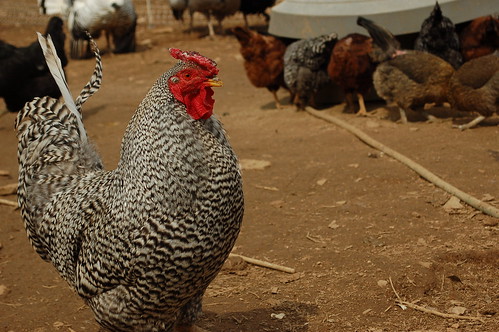 |
| Plymouth Rock Rooster |
The beak, shank and toes are yellow in color. It has clean shank or no one feather in its feet. The tail is short like other American class.
This bird is docile and it is suitable for backyard pet. The bird can be tamed easily. The hen is broody too so the hen can hatch the eggs.
Photo by: Just Chaos
Photo by: Carly and Art
Thursday, August 26, 2010
Tips on how to select egg-laying chicken breed
To produce more eggs in your backyard, you have to select the right chicken. There are so many chicken breeds that you can choose. You can consider some factors before buying the hen. Here are the things that you should consider:
1. Dual purpose or layer
Some dual purpose can lay many eggs, such as, Plymouth Rock, New Hampshire Red, and Rhode Island Red The rooster has good meat and you can sell the meat. After retired from laying, you can sell the old hen.
2. The egg shield
Most chicken lay brown shielded eggs. If you want other color shield, you should raise certain chicken breed. To produce white eggs, you can raise chicken breed, such as, Catalana, Leghorn, and more. If you want produce blue eggs or Easter eggs, you can raise Araucana and Ameraucana. Some hen lay green egg too.
Egg shield color does not represent the nutrition content.
3. Winter layer
In winter, most chicken does not lay. They rest during the winter. However, some breed can lay in winter, such as, Plymouth Rock, New Hampshire red, and Rhode Island Red. The chicken breed give you benefit even in winter.
4. The potential egg
Some chicken breed can lay up to 300 eggs such as, white leghorn. The dual purpose also lay over 250 eggs in a year.
5. The weigh eggs
Some chicken breeds lay big eggs but some other lay small eggs.
6. The conversion rate
The conversion rate is the ability of the hen to convert the chicken feed to the eggs. The efficient chicken which can produce more eggs with fewer chicken feed is very good.
1. Dual purpose or layer
Some dual purpose can lay many eggs, such as, Plymouth Rock, New Hampshire Red, and Rhode Island Red The rooster has good meat and you can sell the meat. After retired from laying, you can sell the old hen.
2. The egg shield
Most chicken lay brown shielded eggs. If you want other color shield, you should raise certain chicken breed. To produce white eggs, you can raise chicken breed, such as, Catalana, Leghorn, and more. If you want produce blue eggs or Easter eggs, you can raise Araucana and Ameraucana. Some hen lay green egg too.
Egg shield color does not represent the nutrition content.
3. Winter layer
In winter, most chicken does not lay. They rest during the winter. However, some breed can lay in winter, such as, Plymouth Rock, New Hampshire red, and Rhode Island Red. The chicken breed give you benefit even in winter.
4. The potential egg
Some chicken breed can lay up to 300 eggs such as, white leghorn. The dual purpose also lay over 250 eggs in a year.
5. The weigh eggs
Some chicken breeds lay big eggs but some other lay small eggs.
6. The conversion rate
The conversion rate is the ability of the hen to convert the chicken feed to the eggs. The efficient chicken which can produce more eggs with fewer chicken feed is very good.
Monday, August 23, 2010
How to keep your hen laying in winter
In cold winter, hen is difficult to lay. Some chicken cannot lay in winter like Mediterranean class or Asia Class. Naturally, a hen will stop laying in winter. They need to rest their body that it is important for the body. For backyard chicken, you have better to rest your chicken rather than forcing it to lay.
If you have a flock for business, you can "force" the eggs to lay. It is because you will lose if they take the rest. They still must pay for chicken food, human, electric, and others.
If you still want to produce eggs in winter, you can do like this:
1. Add additional light in the cage. It can reduce their cold suffered in winter.
2. Provide warm water. Do not let the water frozen. Lack of water can make the chicken stop to lay. You can put electric dog bowl that keep the water frozen. You can replace the water often.
3. Food the chicken food with high protein. They need consumption for carbohydrate to warm their body. They also need protein and calcium that is very important for egg production. Some article suggest kitchen chow and grind with cracked corn. I think it is not good because kitten chow can affect the taste of egg. You should buy the food at poultry shop or you can mix high protein chicken food. The protein for food is: soy, meat powder, fish powder, and more.
4. The air circulation must be good. Make a good ventilation system so the hen can breath well. Do not close the coop so the air cannot in or out.
5. Put hay inside the coop so the hen can lay in it. It can make the chicken warm.
Notice: Force your hen lay in winter could be loss you. To make the hen lays in winter, you need to provide additional food, light and human power. You must pay more for labor too because only few people who want works in winter. Therefore, you need to calculate the benefit of laying eggs in winter. Compare the cost with the egg prices.
If you have a flock for business, you can "force" the eggs to lay. It is because you will lose if they take the rest. They still must pay for chicken food, human, electric, and others.
If you still want to produce eggs in winter, you can do like this:
1. Add additional light in the cage. It can reduce their cold suffered in winter.
2. Provide warm water. Do not let the water frozen. Lack of water can make the chicken stop to lay. You can put electric dog bowl that keep the water frozen. You can replace the water often.
3. Food the chicken food with high protein. They need consumption for carbohydrate to warm their body. They also need protein and calcium that is very important for egg production. Some article suggest kitchen chow and grind with cracked corn. I think it is not good because kitten chow can affect the taste of egg. You should buy the food at poultry shop or you can mix high protein chicken food. The protein for food is: soy, meat powder, fish powder, and more.
4. The air circulation must be good. Make a good ventilation system so the hen can breath well. Do not close the coop so the air cannot in or out.
5. Put hay inside the coop so the hen can lay in it. It can make the chicken warm.
Notice: Force your hen lay in winter could be loss you. To make the hen lays in winter, you need to provide additional food, light and human power. You must pay more for labor too because only few people who want works in winter. Therefore, you need to calculate the benefit of laying eggs in winter. Compare the cost with the egg prices.
Wednesday, August 18, 2010
Broiler Chicken : provide chicken meat in 60 days
Broiler is the chicken raised for meat production. The chicken growth is very fast. Most farmers use this commercial chicken. The broiler has been developed from Cornish rock or Cornish chicken which has wide breast. The breeder tries hard to find efficient broiler that can convert the feed efficient. The aim is to raise the farmer benefit. With high conversion rate, the farmer can retrench the feed.
The feed of the broiler is commercial food from feed mill. The commercial food contains seed, grain, concentrate, vitamin, mineral, and others. Some food contain hazardous chemical like hormone that can disturb the people who eat the meat. To produce organic chicken, some farmer buys the organic chicken feed or they mix the natural chicken feed. The farmer also raises the chicken above the grassland or pasture. The meat of broiler in pasture is more health than common broiler. The chicken eats the grass, weed, bugs, insects and other.
Broiler is white in color. It has middles single comb with double witted and white earlobes. The beak and the shank are white in color. The skin of the chicken is yellow.
The farmer harvests the chicken at 60 days age. At the time, the chicken weighs 2 kilograms. In my country, the farmer harvests the broiler in 40 days age. The consumer does not like heavy chicken. They likes small broiler which weighs only 1.3 to 1.6 kilogram. The farmer also like to harvest early because they will get benefit fast. Beside produce carcass, the broiler farm also produces manure and feather.
see also : how to raise broiler
The feed of the broiler is commercial food from feed mill. The commercial food contains seed, grain, concentrate, vitamin, mineral, and others. Some food contain hazardous chemical like hormone that can disturb the people who eat the meat. To produce organic chicken, some farmer buys the organic chicken feed or they mix the natural chicken feed. The farmer also raises the chicken above the grassland or pasture. The meat of broiler in pasture is more health than common broiler. The chicken eats the grass, weed, bugs, insects and other.
Broiler is white in color. It has middles single comb with double witted and white earlobes. The beak and the shank are white in color. The skin of the chicken is yellow.
The farmer harvests the chicken at 60 days age. At the time, the chicken weighs 2 kilograms. In my country, the farmer harvests the broiler in 40 days age. The consumer does not like heavy chicken. They likes small broiler which weighs only 1.3 to 1.6 kilogram. The farmer also like to harvest early because they will get benefit fast. Beside produce carcass, the broiler farm also produces manure and feather.
see also : how to raise broiler
Sunday, August 15, 2010
How to tame chicken
Some chicken is afraid to the owner. We are difficult to hand the chicken. When we need to cure them, we should catch it hardly. They will run when we try close them.
1. Raise the chicken since young. The chicken will recognize you well and it will not afraid to you. Hand the chicken when it is young.
2. Feed them with your hand. You can put some grain in your hand. The chicken will approach you. They will eat the seed from your hand. They will recognize you.
3. Do not release the chicken at free range. The chicken are easy to wild like their ancestor.
NB: Some chicken is difficult to tame such as sicilian buttercup, jungle fowl and other. You should hard work to do it.
1. Raise the chicken since young. The chicken will recognize you well and it will not afraid to you. Hand the chicken when it is young.
2. Feed them with your hand. You can put some grain in your hand. The chicken will approach you. They will eat the seed from your hand. They will recognize you.
3. Do not release the chicken at free range. The chicken are easy to wild like their ancestor.
NB: Some chicken is difficult to tame such as sicilian buttercup, jungle fowl and other. You should hard work to do it.
Friday, August 13, 2010
Brahma Chicken Profile
Brahma Chicken is a Asiatic Chicken Breed from India. As guess its name, the Bird origin is in the Brahmaputra region, India. This is the biggest breed among Asiatic breed. The rooster weighs up to 12 pounds; while the hen weighs 9 pounds. The cockerel weighs 10 pounds and the pullet weighs 8 pounds.
 The chicken has pea comb, double witted, and red earlobes. It has thick feather so it is good to hatch the eggs. This chicken has good reputation as good setters and good mother. You can trust them to raise their chick. It has feather in shanks, The tail feather is short. Most tail the feather is black in color. rooster has imperfect feather tail. Some chicken has no tail (rumpless).
Beside the weighs, the bird can lay many eggs too. It can lay three eggs a week. The chicken also tolerate with winter.
This breed has been imported 1846 in America. The breed has been recognized by American Poultry Association (APA). Brahma Chicken have color variation; light, dark, and buff.
This bird is very tame and docile. The roosters is very tame and not aggressive to human. The bird is not easy to scared. That is why people raise this bird as pet. There are bantam version of this chicken.
Photo By : Ripperda

Beside the weighs, the bird can lay many eggs too. It can lay three eggs a week. The chicken also tolerate with winter.
This breed has been imported 1846 in America. The breed has been recognized by American Poultry Association (APA). Brahma Chicken have color variation; light, dark, and buff.
This bird is very tame and docile. The roosters is very tame and not aggressive to human. The bird is not easy to scared. That is why people raise this bird as pet. There are bantam version of this chicken.
Photo By : Ripperda
Subscribe to:
Posts (Atom)